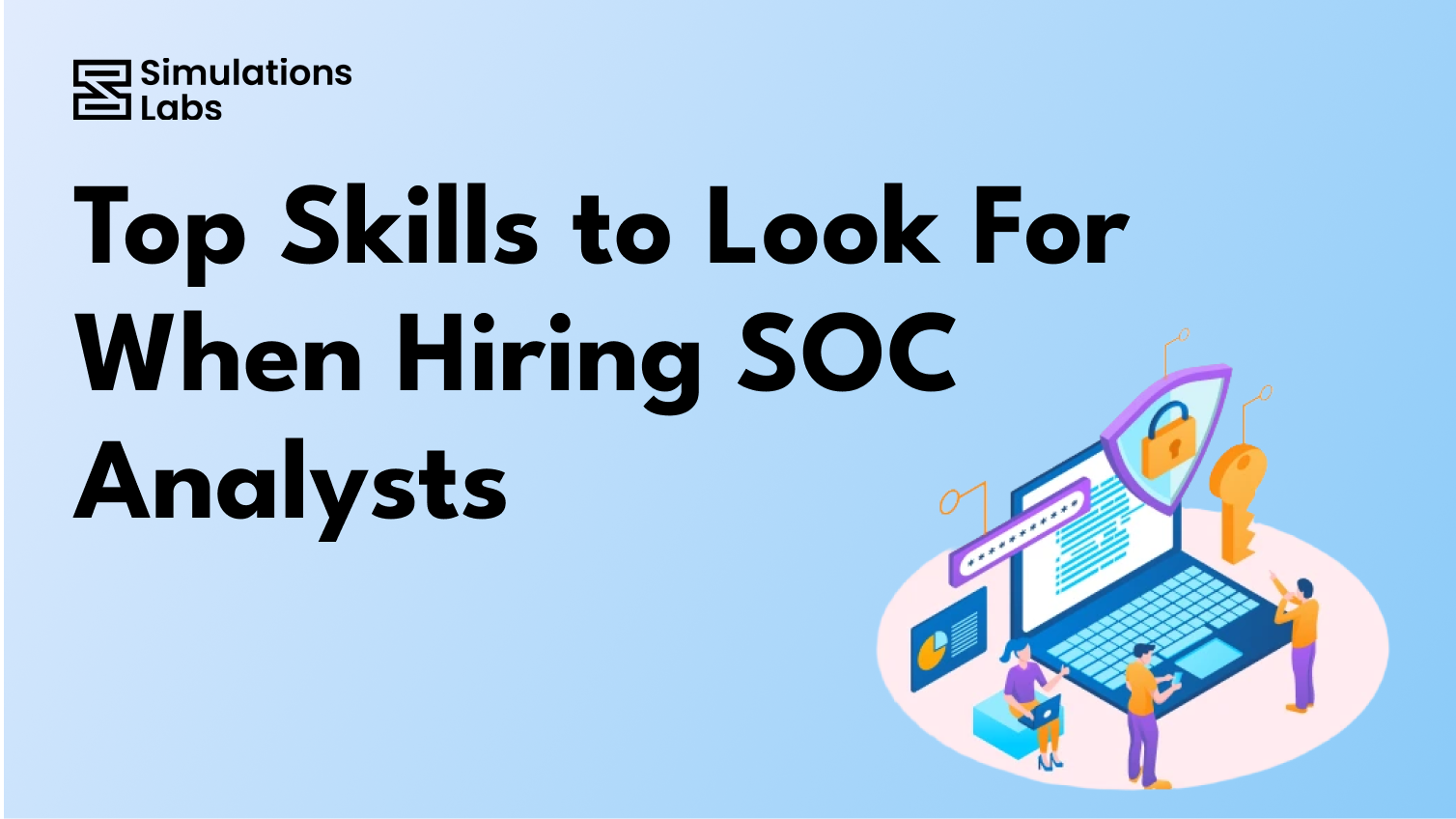
Hiring skilled SOC analysts is one of the most important investments a startup, SME, or enterprise can make to defend against cybersecurity threats. But what exactly separates a competent analyst from an exceptional one?
In this guide, we’ll define the must-have SOC skills, explain how to evaluate candidates with a hands-on assessment in a real-world environment, and highlight the key tools and techniques to look for.
What you'll learn: a clear hiring checklist, sample evaluation scenarios, and practical tips to assess technical and soft skills so your security operations center (SOC) can detect, investigate, and respond effectively.
Why hiring the right SOC analyst matters

One weak link in your SOC can mean missed detections, slow incident response, and costly breaches. Skilled analysts reduce mean time to detect (MTTD) and mean time to respond (MTTR). They also improve overall security posture by refining detection rules, performing threat hunting, and mentoring junior staff.
Core SOC skills every candidate should have
Below are the foundational technical and non-technical soc skills to screen for during hiring.
1. Incident detection & alert triage
- Understand how to prioritize alerts based on severity, impact, and context.
- Ability to differentiate false positives from true incidents.
- Familiarity with SIEM platforms (e.g., Splunk, Elastic, QRadar) and alert workflows.
2. Log analysis & threat hunting
- Skill in parsing logs (Windows Event Logs, Syslog, cloud logs) to find indicators of compromise.
- Experience writing queries (KQL, Splunk SPL, Elastic DSL) for proactive threat hunting.
3. Network & packet analysis
- Knowledge of TCP/IP, DNS, HTTP, and common protocols.
- Experience using tools like Wireshark and Zeek to analyze packet captures.
4. Endpoint detection & response (EDR)
- Familiarity with EDR platforms (CrowdStrike, SentinelOne, Carbon Black).
- Understanding of host-based indicators and containment strategies.
5. Malware analysis fundamentals
- Ability to identify suspicious binaries, understand basic static and dynamic analysis concepts, and interpret sandbox results.
6. Scripting & automation
- Proficiency in Python, Bash, or PowerShell to automate tasks, parse logs, and enrich alerts.
7. Communication & documentation
- Clear incident reporting, creating playbooks, and communicating with technical and non-technical stakeholders.
8. Critical thinking & curiosity
Top analysts are inquisitive — they verify assumptions, challenge alerts, and investigate root causes instead of relying purely on signature detections.
Advanced skills that set candidates apart
- Threat intelligence integration — mapping IoCs to adversary TTPs.
- Forensics — imaging drives, timeline analysis, and artifact recovery.
- Cloud security — investigating incidents in AWS, Azure, or GCP environments.
- Red team/blue team experience — practical understanding of attack paths and defensive mitigations.
Evaluating SOC skills: Why hands-on assessment beats interviews
Traditional interviews and certifications are useful, but can miss practical competence. A hands-on assessment in a real-world environment reveals how candidates think under pressure, what tools they reach for, and how they follow processes.
Benefits of hands-on testing:
- Observe investigative methodology and time-to-detect.
- Measure tool proficiency (SIEM, EDR, packet analysis).
- Expose gaps in automation or scripting ability.
Designing a high-value hands-on assessment
Structure the assessment to reflect real SOC tasks. Use staged incidents with escalating complexity.
Essential components
- Alert Triage: Provide a SIEM view with alerts, logs, and context. Ask the candidate to prioritize and justify.
- Investigation: Give raw artifacts (PCAP, logs, EDR telemetry) and ask for a timeline and root cause.
- Containment & Remediation: Request steps to contain the incident and recommendations to prevent recurrence.
- Automation Task: Short scripting exercise (e.g., parse logs and extract suspicious IPs).
- Communication: Write a short incident report and a playbook entry.
Scoring rubric
- Accuracy of detection & findings (40%)
- Use of appropriate tools and queries (25%)
- Quality of remediation and recommendations (15%)
- Scripting/automation (10%)
- Clarity of communication (10%)

Simulate real-world environments with Simulations Labs
Running realistic, containerized simulations removes the complexity of building infrastructure for assessments. Simulations Labs offers a platform to deploy ready-made or custom scenarios, monitor candidate activity, and export detailed performance reports. This is ideal for startups, SMEs, and enterprises looking to standardize hiring assessments or run scalable recruitment events.
Key tools to look for in a candidate's skillset
Make sure applicants can demonstrate familiarity with at least a few of these common SOC tools and technologies:
- SIEM: Splunk, Elastic, QRadar
- EDR: CrowdStrike, SentinelOne, Carbon Black
- Packet analysis: Wireshark, Zeek
- Forensics: Autopsy, FTK, Volatility
- Scripting: Python, PowerShell, Bash
- Cloud logging & monitoring: AWS CloudTrail, Azure Monitor, GCP Logging
.png)
Interview questions that reveal practical SOC skills
- How do you triage an alert that shows unusual outbound traffic from a workstation?
- Describe a time you found a threat through log correlation. What queries did you use?
- Explain how you would investigate a suspected ransomware infection end-to-end.
- Show a short script you’ve written to automate a SOC task.
Onboarding and continuous assessment
Hiring is the start. Continuous validation of skills through regular hands-on assessments, table-top exercises, and post-incident retrospectives keeps your SOC sharp.
Use Simulations Labs to schedule recurring training and to host CTF-style events that build team capabilities while measuring progress: Host CTF Competition.
Checklist: Quick hiring scorecard for SOC analysts
- Technical fundamentals: network, logs, endpoints — pass
- Hands-on scenario: triage + investigation — pass
- Scripting/automation task — pass
- Communication & playbook writing — pass
- Familiarity with at least 3 SOC tools — pass
Conclusion
Hiring SOC analysts with the right mix of technical and soft skills is critical to building an effective security operations center. Prioritize candidates who demonstrate practical experience through a structured hands-on assessment in a real-world environment, and verify proficiency with common tools. Simulations Labs can help you design and run realistic assessments at scale so you hire confidently and reduce risk.
Ready to run realistic SOC analyst assessments? Explore Simulations Labs to launch hands-on evaluations quickly and track candidate performance in detail
Frequently Asked Questions
1. What are the most important SOC skills for entry-level analysts?
Entry-level analysts should be strong at alert triage, basic log analysis, familiarity with a SIEM, and clear communication. Foundational scripting (PowerShell or Bash) is a big plus.
2. How long should a hands-on assessment take?
Plan 60–120 minutes for a realistic assessment: 15–20 minutes for triage, 40–60 minutes for investigation and remediation, and 15–20 minutes for scripting and reporting.
3. Can I run assessments without building infrastructure?
Yes. Platforms like Simulations Labs provide managed, containerized simulations so you can run realistic tests without DevOps work.
4. Should I require certifications?
Certifications (e.g., GCIA, GCIH, CompTIA Security+) are useful signals but should not replace practical hands-on evaluation. Use certifications as one component of your hiring criteria.
5. What metrics should I track during assessments?
Track time-to-detect, accuracy of findings, number of missed indicators, quality of remediation steps, and script effectiveness. These metrics create an objective baseline for hiring decisions.
6. How can Simulations Labs help with employer branding?
Simulations Labs enables organizations to host public CTFs and simulations, which attract talent and showcase your security culture.
Learn more in our guides and case studies